Who's That Girl?
It's Me! Here I am Nov 1976 with my family at a Texas A&M football game getting my pic taken with Reveille, our mascot. My brother was a sophomore in the Corps of Cadets. I looked up who we played in November of 1976. There were 3 games that month & we whooped all of our opponents' butts. We whooped some Arkansas Razorback butt on Nov 13th. We whooped some TCU Horned Frog [snort] butt on Nov 20th. And we whooped some Texas tea-sippin' Longhorn butt on Nov 25th. In fact that year we were whoopin' butt and takin' names. We were only outscored twice by Houston and Texas Tech. [Note: Aggies are not losers. We may get outscored, but we never lose. At least that's what my dad always said.] We even went on to whoop some Florida butt at the Sun Bowl on Jan 2nd. Not a bad year for the Ags.
I remember the pic being taken, but I have no idea which November game it was taken at. Pretty sure it wasn't Arkansas because I've never been to Arkansas. So that leaves the TCU and Texas games. The TCU game was at home at Kyle Field and Texas was at Austin. If I had to guess, I'd say the Texas game in Austin as there are people seated on the field level & that's where the away fans used to sit at an Aggie-t.u. game. [Yup. That's where we'd put 'em too.] Also, that would explain why I'm on field level and having my pic taken with our beloved Reveille.
Gig'em!
Wednesday, March 24, 2010
Friday, March 19, 2010
Part 2 of Dancing With the Storms
Part 2 [For Part 1, click here.]
One-Two-Three...One-Two-Three...
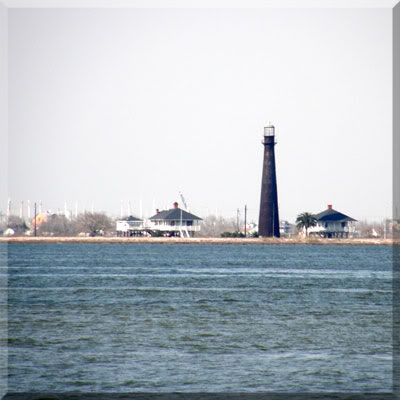
By 4 June 1900, Daniel, Annie and their five children [one of which is my 1st great-grandmother Boo] are living in Eagle Pass, Texas, which is no where near the coast. In fact, it's on the other side of the state on the Texas-Mexico border. So why did they move? I'm not real sure, but I do know one thing. On 8 Sep 1900, they missed the single most devastating hurricane that has ever hit the United States coast. That's right, the Storm of 1900. [Obviously, we still hadn't started naming them yet.] Everyone hears about the devastation that occurred on Galveston Island and the estimation of 8000 that perished from the storm because it was so much more populated, but since Bolivar Peninsula is so close to Galveston, it was devastated too. Over 120 people used the lighthouse for shelter, but dozens didn't make it to the lighthouse and died. In fact, the only ones that lived were the ones who had sought out shelter in the lighthouse on the Peninsula. If Daniel and Annie had stayed, would they and their family have made it to the lighthouse?
Which kind of brings me back to why they moved.
So far away from the coast.
View Bolivar Peninsula-Eagle Pass in a larger map
Also, how'd they get there? Well, they didn't walk, and I don't think they went by wagon [but they very well could have]. But they may have gone another way. You see, the Galveston, Harrisburg and San Antonio Railway had completed the railway to Spoffard, Texas then on to Eagle Pass in 1882. After that it was extended into Piedras Negras, Mexico, the town on the opposite side of the border from Eagle Pass. The completion of this railway facilitated exportation and importation of goods.
Basically connecting the Port of Galveston with Mexico.
And Eagle Pass' population soared [pardon the pun].
But why did Daniel and Annie leave Bolivar Peninsula? Well, in the last census where the family is listed in 1880, Daniel is listed as a carpenter, and he's listed as being unemployed for the last 12 months.
With his wife Annie.
With their 2 year old son.
And they were living in a boarding house.
Not being able to access the 1890 population schedule, I don't know what their lifestyle was like on the Peninsula in 1890. Had it been any better? Additionally, how much did his old fracture from the Civil War affect what Daniel could do physically? I mean, at the time his leg was fractured in the Civil War did it get set immediately? I dunno, but if things weren't looking too good financially and he got wind of the opportunities available in Eagle Pass, maybe he decided to risk it all and move his family.
Of course, Eagle Pass [and the border in general] was not a very safe place to be. You've heard of the wild west, haven't you? Well, before the railway, Eagle Pass had a rough reputation. Not exactly the best place in which to settle and raise your family.
So, it couldn't have been an easy decision for Daniel and Annie to make. To leave what they knew and go to something they didn't know. However, it was the right decision and not just because they had avoided the Storm of 1900. In the 1900 census in Eagle Pass, Daniel was listed as a dry goods merchant. Obviously taking advantage of the population growth due to the expansion of the railway in the border town. They were renting their home, but they were in a home ~ not a boarding house.
I wonder how Daniel and Annie reacted when they heard of the destruction made by the Storm of 1900 to the place they had called home for over 13 years? Had they worried about those they had left behind? Their friends? I suspect they were counting their blessings when they finally heard the terrible news.
One-Two-Three...One-Two-Three...
The logical part of me says that of course they moved for the opportunity at a better life.
But a part of me wonders, though, if perhaps Daniel and Annie just had a 6th sense when it came to the Gulf Coast and hurricanes.
And what of his leg? If it had bothered him when he lived on the Gulf Coast, did moving to a drier climate make it feel any better?
In any case, having the ability to look back on their lives, it seems to me that Daniel and Annie were very good dancers.
For they had danced with Mother Nature.
And were never voted off the show.
[Snort.] Yes, I've seen the show Dancing With the Stars. Unfortunately.
Ironically, the first time was right after Hurricane Ike hit Galveston Island. Our electricity and cable were still off, and with our generator, t.v., and rabbit ears, we were only able to tune-in clearly 2 English-speaking channels. One evening after dinner [from a can], we settled down to watch some T.V. What was on? One channel had the news. The other had Dancing With the Stars. Since we were tired of watching and listening to news and since no one in my house speaks Spanish except for me, Dancing With the Stars won that night.
[rolling eyes heavenward] Below is a small slide show of some of the photos I took yesterday on Bolivar Peninsula. Most of the damage from Hurricane Ike is evident in not what is there, but what is not there. The peninsula [which is a misnomer because it's actually not connected to the mainland by land but by a bridge on the other end] is clean, but bare. They have a long way to go in rebuilding. However as history reveals, they are not alone, for those who came before, had to rebuild too.
One-Two-Three...One-Two-Three...
| Lighthouse on Bolivar Peninsula, Texas. 2010 |
By 4 June 1900, Daniel, Annie and their five children [one of which is my 1st great-grandmother Boo] are living in Eagle Pass, Texas, which is no where near the coast. In fact, it's on the other side of the state on the Texas-Mexico border. So why did they move? I'm not real sure, but I do know one thing. On 8 Sep 1900, they missed the single most devastating hurricane that has ever hit the United States coast. That's right, the Storm of 1900. [Obviously, we still hadn't started naming them yet.] Everyone hears about the devastation that occurred on Galveston Island and the estimation of 8000 that perished from the storm because it was so much more populated, but since Bolivar Peninsula is so close to Galveston, it was devastated too. Over 120 people used the lighthouse for shelter, but dozens didn't make it to the lighthouse and died. In fact, the only ones that lived were the ones who had sought out shelter in the lighthouse on the Peninsula. If Daniel and Annie had stayed, would they and their family have made it to the lighthouse?
Which kind of brings me back to why they moved.
So far away from the coast.
View Bolivar Peninsula-Eagle Pass in a larger map
Also, how'd they get there? Well, they didn't walk, and I don't think they went by wagon [but they very well could have]. But they may have gone another way. You see, the Galveston, Harrisburg and San Antonio Railway had completed the railway to Spoffard, Texas then on to Eagle Pass in 1882. After that it was extended into Piedras Negras, Mexico, the town on the opposite side of the border from Eagle Pass. The completion of this railway facilitated exportation and importation of goods.
| Photo courtesy of Texas Transportation Museum |
Basically connecting the Port of Galveston with Mexico.
And Eagle Pass' population soared [pardon the pun].
But why did Daniel and Annie leave Bolivar Peninsula? Well, in the last census where the family is listed in 1880, Daniel is listed as a carpenter, and he's listed as being unemployed for the last 12 months.
With his wife Annie.
With their 2 year old son.
And they were living in a boarding house.
| View of Bolivar Peninsula Lighthouse from ferry. 2010 |
Not being able to access the 1890 population schedule, I don't know what their lifestyle was like on the Peninsula in 1890. Had it been any better? Additionally, how much did his old fracture from the Civil War affect what Daniel could do physically? I mean, at the time his leg was fractured in the Civil War did it get set immediately? I dunno, but if things weren't looking too good financially and he got wind of the opportunities available in Eagle Pass, maybe he decided to risk it all and move his family.
| Eagle Pass, Tx., 1887 Bird's Eye View of Eagle Pass Maverick Co, Texas. 1887, 1887. Lithograph (hand-colored), 16 x 22 in., Lithographer unknown. Amon Carter Museum, Fort Worth. Gift of Mr. Charles Downing. Photo Courtesy of Wikimedia Commons. |
So, it couldn't have been an easy decision for Daniel and Annie to make. To leave what they knew and go to something they didn't know. However, it was the right decision and not just because they had avoided the Storm of 1900. In the 1900 census in Eagle Pass, Daniel was listed as a dry goods merchant. Obviously taking advantage of the population growth due to the expansion of the railway in the border town. They were renting their home, but they were in a home ~ not a boarding house.
I wonder how Daniel and Annie reacted when they heard of the destruction made by the Storm of 1900 to the place they had called home for over 13 years? Had they worried about those they had left behind? Their friends? I suspect they were counting their blessings when they finally heard the terrible news.
One-Two-Three...One-Two-Three...
The logical part of me says that of course they moved for the opportunity at a better life.
But a part of me wonders, though, if perhaps Daniel and Annie just had a 6th sense when it came to the Gulf Coast and hurricanes.
And what of his leg? If it had bothered him when he lived on the Gulf Coast, did moving to a drier climate make it feel any better?
In any case, having the ability to look back on their lives, it seems to me that Daniel and Annie were very good dancers.
For they had danced with Mother Nature.
And were never voted off the show.
[Snort.] Yes, I've seen the show Dancing With the Stars. Unfortunately.
Ironically, the first time was right after Hurricane Ike hit Galveston Island. Our electricity and cable were still off, and with our generator, t.v., and rabbit ears, we were only able to tune-in clearly 2 English-speaking channels. One evening after dinner [from a can], we settled down to watch some T.V. What was on? One channel had the news. The other had Dancing With the Stars. Since we were tired of watching and listening to news and since no one in my house speaks Spanish except for me, Dancing With the Stars won that night.
[rolling eyes heavenward] Below is a small slide show of some of the photos I took yesterday on Bolivar Peninsula. Most of the damage from Hurricane Ike is evident in not what is there, but what is not there. The peninsula [which is a misnomer because it's actually not connected to the mainland by land but by a bridge on the other end] is clean, but bare. They have a long way to go in rebuilding. However as history reveals, they are not alone, for those who came before, had to rebuild too.
Family Stories Turns 1yo Today
Wow! Family Stories Turns 1 today.
Where did the time go?
Oh yeah. I've been telling my family's stories ~ the good, the bad, and the ugly. [Of course, sometimes the bad and the ugly tend to be quite interesting.]
Did everyone get a glass of champagne?
[Raising glass in air.]
Here's to many more blogoversaries.
And here's to those who keep coming back time and again to read my family's stories. And since I'm in an Irish mood this week [I wonder why], here's a lil' Irish blessin' t' take with ya':
May the road rise to meet you.
May the wind be always at your back.
May the sun shine warm upon your face.
And rains fall soft upon your fields.
And until we meet again,
May God hold you in the hollow of His hand.
There's 18 more stanzas to this lil' Irish blessin'. I could go on, but I think you get the gist. Thank you so very much for reading Family Stories ~ I greatly appreciate it!
So 'till my next post, which is the part 2 to Daniel and Annie's story & will be later today, don't do anything I wouldn't do. [Snort.]
Thursday, March 18, 2010
Dancing With the Storms, Pt 1
One-Two-Three...One-Two-Three...
When looking at your ancestors' lives, have you ever wondered if maybe they had a 6th sense that led them away from trouble? Or maybe it's just how everything worked out. And we, having the ability to look and analyze their lives as a whole, can simply see patterns about their lives that they had no clue that they were making.
Either way, the patterns are there.
My 2nd great-grandfather, Daniel Rook Vaughn, served on the Union side in the Civil War for the state of Michigan [where he was born]. He enlisted 10 Oct 1861 and was discharged 10 Jun 1865. He took a little time off from the military, working -at least part of the time- as a machinist. However for whatever reason, Daniel reenlisted in the U.S. Army in Rochester, New York on 28 Oct 1867. He was stationed at Fort Brown, Texas.
Fort Brown? Really? Geez. If I'd only known. While growing up on the Texas-Mexico border I could've easily visited where my 2nd great-grandfather had spent 3 years of his life. I must have passed by this fort a gazillion times on my way to the beach [South Padre Island]. Now? I live seven hours away. [sigh]
One-Two-Three...One-Two-Three...
Anywho, before Daniel actually made it to Fort Brown, the soldiers that were there had already started to rebuild the fort due to the damages sustained in the Civil War. Then, the seventh hurricane of 1867 that formed Oct 2nd, hit the Port of Brownsville, wrecking all the work they had done on Fort Brown. So, when Daniel showed up at Fort Brown, which would've been after his enlistment date 28 Oct 1867, he was just in time to help rebuild.
Daniel served his 3 years ~all at Fort Brown~ and was discharged 28 Oct 1870, but not before he was counted in the 1870 census at Fort Brown. [Thank God.] I have no records of him for the next 3 1/2 years until he marries my 2nd great-grandmother, Annie O'Brien in New Orleans, Louisiana 19 Mar 1874. What I wouldn't do to know what he was up to in that time period, and why he ended up in New Orleans. There's a lot of mischief to be had in New Orleans, or so I've heard. [Wink.]
One-Two-Three...One-Two-Three...
Now, right before my Annie O'Brien came to New Orleans, Louisiana from Dublin, Ireland in 1872, there had been a bad hurricane that hit New Orleans leaving a lot of damage in its path the previous year. Talk about timing, huh? Or maybe Annie had brought the luck of the Irish with her. [Shrugs.]
Somehow and some way Daniel and Annie met in New Orleans and married. [Again, what I wouldn't do to know what was going on with either one before their nuptials.]
View TX-LA Gulf Coast in a larger map
For whatever reason, they moved to Bolivar Peninsula, Galveston County, Texas by 7 Apr 1878. [FYI: Bolivar is pronounced like the name "Oliver," but with a "B" in front of it. Otherwise, if you pronounce it any other way, you'll sound like an outsider. And you don't want that.] I know they were here by this time because that's the birth date of their son, Henry Lewis Vaughn, who was born on the Peninsula. Now, this is four years after their marriage, but according to a later census, it's reported that Annie had 5 children living out of a total of eight, which may explain some of the time between their marriage and Henry's birth.
Turns out, though, they moved just in time. A hurricane that sustained 100 mph winds hit near New Orleans 1 Sep 1879. [Honest. I couldn't make this stuff up.]
One-Two-Three...One-Two-Three...
So far, between the two of them that's 3 hurricanes that Daniel and Annie had "just missed." However, they must not have been too scared of these storms because Bolivar Peninsula is just a ferry ride away from Galveston, Island. I really don't blame them, though, because the sunrises and sunsets on both Bolivar Peninsula and Galveston Island are incredible. And it's easy to be lulled by the sound of the hypnotic waves as they break on the shore. Of course, if you've read a few of my posts, you know I have a "thing" for beaches and islands. Who knows, maybe Daniel and Annie had a "thing" for them too.
They were still living there in 1880 and 1890. Because Daniel had been in the Civil War on the Union side, he was counted in the 1890 Veteran's and Widow's census. [Thank God.] Actually, he counted himself. How can that be? He was the enumerator for this schedule. I know. I'm lucky. I have nothing of Daniel's -no pictures, no artifacts, no letters, and no stories. Nothing. Zilch. But I have this 1890 Veteran's and Widow's census that has his handwriting. And what excellent penmanship! This census find was really a coup because it confirmed his Civil War service information and he listed his disability from the war -a fracture on his left leg above the knee. [Wince.]
I've heard there's nothing like the arthritis that can set-in an old fracture. And the weather here on the Gulf Coast can turn on a dime. I wonder if his old war injury ever bothered him?
It seems that their ability to evade storms faltered the next year, a little more than 5 months after their last son was born in 1891 a hurricane hit Bolivar Peninsula. However, it wasn't that much of a storm ~ just a category 1 with minimal damage.
One-Two-Three...One-Two-Three...
Note: Because I'm really serious about my research,
I took off today with my kids to visit Galveston Island
and Bolivar Peninsula.
What can I say? I. Am. Dedicated.
And I wanted to take some photos for you to give you
a better idea of what the area looks like.
I'm even going to sample the food and frolic
on the beach for you. [Snort. Wink.]
No thanks needed. Really. It's my pleasure.
While I'm off "researching," here's some questions to ponder, & I'll
be back tomorrow with the rest of Daniel and Annie's story.
Did Daniel & Annie really have a 6th sense about these storms?
Did they continue to live on the Gulf Coast?
Do you have a "thing" for beaches?
[For Part 2, click here.]

| Fort Brown, Texas from 23 Mar 1861 issue of Harper's Weekly |
Either way, the patterns are there.
My 2nd great-grandfather, Daniel Rook Vaughn, served on the Union side in the Civil War for the state of Michigan [where he was born]. He enlisted 10 Oct 1861 and was discharged 10 Jun 1865. He took a little time off from the military, working -at least part of the time- as a machinist. However for whatever reason, Daniel reenlisted in the U.S. Army in Rochester, New York on 28 Oct 1867. He was stationed at Fort Brown, Texas.
Fort Brown? Really? Geez. If I'd only known. While growing up on the Texas-Mexico border I could've easily visited where my 2nd great-grandfather had spent 3 years of his life. I must have passed by this fort a gazillion times on my way to the beach [South Padre Island]. Now? I live seven hours away. [sigh]
One-Two-Three...One-Two-Three...
Anywho, before Daniel actually made it to Fort Brown, the soldiers that were there had already started to rebuild the fort due to the damages sustained in the Civil War. Then, the seventh hurricane of 1867 that formed Oct 2nd, hit the Port of Brownsville, wrecking all the work they had done on Fort Brown. So, when Daniel showed up at Fort Brown, which would've been after his enlistment date 28 Oct 1867, he was just in time to help rebuild.
Daniel served his 3 years ~all at Fort Brown~ and was discharged 28 Oct 1870, but not before he was counted in the 1870 census at Fort Brown. [Thank God.] I have no records of him for the next 3 1/2 years until he marries my 2nd great-grandmother, Annie O'Brien in New Orleans, Louisiana 19 Mar 1874. What I wouldn't do to know what he was up to in that time period, and why he ended up in New Orleans. There's a lot of mischief to be had in New Orleans, or so I've heard. [Wink.]
One-Two-Three...One-Two-Three...
Now, right before my Annie O'Brien came to New Orleans, Louisiana from Dublin, Ireland in 1872, there had been a bad hurricane that hit New Orleans leaving a lot of damage in its path the previous year. Talk about timing, huh? Or maybe Annie had brought the luck of the Irish with her. [Shrugs.]
Somehow and some way Daniel and Annie met in New Orleans and married. [Again, what I wouldn't do to know what was going on with either one before their nuptials.]
View TX-LA Gulf Coast in a larger map
For whatever reason, they moved to Bolivar Peninsula, Galveston County, Texas by 7 Apr 1878. [FYI: Bolivar is pronounced like the name "Oliver," but with a "B" in front of it. Otherwise, if you pronounce it any other way, you'll sound like an outsider. And you don't want that.] I know they were here by this time because that's the birth date of their son, Henry Lewis Vaughn, who was born on the Peninsula. Now, this is four years after their marriage, but according to a later census, it's reported that Annie had 5 children living out of a total of eight, which may explain some of the time between their marriage and Henry's birth.
Turns out, though, they moved just in time. A hurricane that sustained 100 mph winds hit near New Orleans 1 Sep 1879. [Honest. I couldn't make this stuff up.]
One-Two-Three...One-Two-Three...
| Sunset from Ferry to Bolivar Peninsula |
So far, between the two of them that's 3 hurricanes that Daniel and Annie had "just missed." However, they must not have been too scared of these storms because Bolivar Peninsula is just a ferry ride away from Galveston, Island. I really don't blame them, though, because the sunrises and sunsets on both Bolivar Peninsula and Galveston Island are incredible. And it's easy to be lulled by the sound of the hypnotic waves as they break on the shore. Of course, if you've read a few of my posts, you know I have a "thing" for beaches and islands. Who knows, maybe Daniel and Annie had a "thing" for them too.
| Daniel Rook Vaughn, Enumerator of 1890 Veteran's & Widow's Schedule |
They were still living there in 1880 and 1890. Because Daniel had been in the Civil War on the Union side, he was counted in the 1890 Veteran's and Widow's census. [Thank God.] Actually, he counted himself. How can that be? He was the enumerator for this schedule. I know. I'm lucky. I have nothing of Daniel's -no pictures, no artifacts, no letters, and no stories. Nothing. Zilch. But I have this 1890 Veteran's and Widow's census that has his handwriting. And what excellent penmanship! This census find was really a coup because it confirmed his Civil War service information and he listed his disability from the war -a fracture on his left leg above the knee. [Wince.]
I've heard there's nothing like the arthritis that can set-in an old fracture. And the weather here on the Gulf Coast can turn on a dime. I wonder if his old war injury ever bothered him?
It seems that their ability to evade storms faltered the next year, a little more than 5 months after their last son was born in 1891 a hurricane hit Bolivar Peninsula. However, it wasn't that much of a storm ~ just a category 1 with minimal damage.
One-Two-Three...One-Two-Three...
Note: Because I'm really serious about my research,
I took off today with my kids to visit Galveston Island
and Bolivar Peninsula.
What can I say? I. Am. Dedicated.
And I wanted to take some photos for you to give you
a better idea of what the area looks like.
I'm even going to sample the food and frolic
on the beach for you. [Snort. Wink.]
No thanks needed. Really. It's my pleasure.
While I'm off "researching," here's some questions to ponder, & I'll
be back tomorrow with the rest of Daniel and Annie's story.
Did Daniel & Annie really have a 6th sense about these storms?
Did they continue to live on the Gulf Coast?
Do you have a "thing" for beaches?
[For Part 2, click here.]
Monday, March 15, 2010
Women in Shades
March is Women's History Month
This month, Shades is celebrating Women's History Month and it has just hit the newsstands! [Well, the digital ones, that is.] That's right, 73 pages of yummy goodness. So, if you have female ancestors [and don't tell me you don't], then you absolutely must check it out! Don't have female ancestors? You're lying, so go read it! [wink] Oh, and there's an article from a certain fave professional photo restoration artist of mine. I'd tell you her name, but why don't you go look at her awesome article.
While you're there perusing the beautiful old photographs, don't forget to check out my new article which focuses on the theme for Women's History Month ~ putting women back into history ~ Where They Belong.

This month, Shades is celebrating Women's History Month and it has just hit the newsstands! [Well, the digital ones, that is.] That's right, 73 pages of yummy goodness. So, if you have female ancestors [and don't tell me you don't], then you absolutely must check it out! Don't have female ancestors? You're lying, so go read it! [wink] Oh, and there's an article from a certain fave professional photo restoration artist of mine. I'd tell you her name, but why don't you go look at her awesome article.
While you're there perusing the beautiful old photographs, don't forget to check out my new article which focuses on the theme for Women's History Month ~ putting women back into history ~ Where They Belong.
Friday, March 5, 2010
He Never Promised Me A Rose Garden
He lived his life in the papers.
Consistently.
Thank God.
In the 1920's, San Antonio, Texas experienced a housing boom, and since the Great Depression was slow in coming to Texas for a number of reasons, the prosperity of the 1920's lasted a little longer than in other states. In the 1930's public housing was on the rise as slums were cleared out, and then in the 1940's another housing boom occurred.
And apparently my grandfather, Joseph Marshall [a.k.a. Big Paw Paw], was in the middle of it all. If you believe what you read in the newspapers, that is.
When I first started researching my grandfather, I didn't really know much about him, other than he wasn't a nice man. In fact, if I recall correctly, the word, "mean" has been used to describe him a few times. Turns out he had a lot of secrets, and maybe - just maybe - if he hadn't been so secretive - you know, kept everything inside- he would've been nicer. Or at least remembered in a lot nicer way. And maybe I wouldn't have been so nosy about his life.
However, he was secretive and I am nosy.
One of the things I did know when I started researching my grandfather [who died 3 years before I was born] was that he had several lumber yards in San Antonio and he'd been involved in demolition throughout the city. And both of these are true because I've verified them through land records, newspapers, and city directories. However, that wasn't really the whole story. There was a fourteen year difference between my grandfather's and grandmother's ages, and by the time "Big Paw Paw" married my grandmother, he'd already lived another life. Literally. A life that he kept to himself.
But if he thought that he took his secrets with him to the grave, he was sadly mistaken. I have some of his genes in me [Goodness, I hope not the bad ones.], and I can be a little tenacious when properly motivated.
And my grandfather's story really motivates me.
If he had wanted to "fly underneath the radar," then he should've stayed out of the papers, but lucky for me, he didn't. With the combination of census records, city directories, historical newspapers, and historical land records, I've pieced together some of my grandfather's work & business history, and here's what I found:
According to the 1910 census, Big Paw Paw and his younger sister, Mary, were living with one of their older married sisters in Galveston, Texas. [Another Mary ~rolling eyes heavenward~ This is the Mary that married a Harry who owned a dairy. I swear it. I couldn't make this stuff up.] Anywho, "Big Paw Paw" was a fisherman with his brother-in-law at the time. He must've mentioned being a fisherman to my dad once, because on one of our many fishing trips on the Laguna Madre Bay, my dad shared with me that his dad had been a fisherman in Galveston. [I've pointed out on the map below where the Laguna Madre is, but to get an idea of where it is in relationship to Galveston, San Antonio, and Texas, click on the link for the bigger map below and "zoom out."
View Texas Coast in a larger map
Big Paw Paw married his sister-in-law, Emma Rosin in San Antonio, Texas in 1917, which was just before he went off to fight in World War I. [His sister Jane had previously married Emma's older brother, Otto Rosin.] When he came back, he and Emma were living in San Antonio, Texas, and his listed occupation was a tree surgeon in the 1920 census.
As I shared this week in my Wordless Wednesday post, he must've had a green thumb. In a San Antonio Express newspaper article dated 12 Nov 1922, Big Paw Paw is pictured with a rose that had a 63-inch stem that he had grown. I wonder if my dad knew this about his father. Growing up, I remember countless times working in the yard with my dad, including our rose garden. He loved it so much that he bought and we ran a plant nursery for a while. And If you've been reading my stories, you can probably guess my dad was quite the entrepreneur (i.e., truck & trailer business, pet shop, plant nursery, etc.). Kinda like Big Paw Paw.
Three years later in a newspaper ad on 20 Dec 1925, he's listed as a "Consulting, Developing Landscape Engineer" for the San Pedro Arms apartment building which was touted in the San Antonio Express newspaper as "San Antonio's Newest and Most Modern Apartment Building." And his business address is listed as well, which made identifying him a lot easier. [How lucky can I get, right?] I'm inclined to think this building development may have been where he added real estate to his list of business activities. Just a guess, though.
Emma is listed as Big Paw Paw's wife until 1923 in historical land records that I have found on the County Clerk's website for Bexar County. [All of them digitized & available for free. ~ "God love 'em," as my Gran and mom used to say.] The twelve-page listing of his land records [Yes, I said, "TWELVE."] is a veritable goldmine of information on my grandfather's business transactions, at least, the ones involving land. He didn't just have a house and building wrecking company and lumber yards. He purchased real estate, wrecked [if necessary] homes, built homes, sold and/or rented homes. It's apparent to me from these records that Big Paw Paw liked to be involved in all aspects of the real estate process. My dad always said he had a home & building wrecking company, but he also told me his dad had taught him to be a carpenter. I have several photos of my dad when he was little on the work-site with Big Paw Paw. It seems that Big Paw Paw believed in learning how to work hard from an early age, and that's probably where my dad got that silly idea from and why I began working for my dad at the age of 8. Additionally, after my dad graduated from college there are land transactions that he executed on my grandfather's behalf, which coincides with what my dad told me about him working for Big Paw Paw early on in his and my mother's marriage. It makes me wonder why the "home & building wrecking company" memory was bigger to my dad than the rest of the business that Big Paw Paw did.
Maybe Big Paw Paw didn't talk much about his business activities. I'm guessing Big Paw Paw wasn't much of a talker. Period. Well, it does seem, though, that he was a big talker with the women.
[For what it's worth, I think he was pretty good lookin', and apparently I'm not alone in my thinkin'.]
Speaking of Big Paw Paw's women, I haven't found Emma on any transactions after 1923, nor have I found a death certificate for her. She just vanishes into thin air, or she got the hell outta Dodge. However, Big Paw Paw's land transactions continue consistently, and amongst them is an affidavit dated 5 Dec 1927 [but filed 19 Mar 1928] where he's talking about how he had purchased a particular piece of property before his marriage to his wife Oveta Marshall who had left him 6 months ago, and that she had no interest in this particular property. Now, I know some of what goes on with Oveta and this property, especially what identifies this Joseph Marshall as Big Paw Paw, but I don't know the whole story. Like, who the heck is Oveta? Is this Emma? However, their divorce story is waiting for me. In another land transaction in 1928 that pertains to this property, to Oveta, and to Big Paw Paw, everyone was kind enough to leave me the cause number and judicial district court that the divorce was filed in. [Thank you.]
Anyhow, I haven't even begun to scratch the surface of Big Paw Paw and his wives and women. And since Big Paw Paw apparently left really nice paper trails, I suspect I'll be finding a lot more about them. At this point, it seems that the women that dealt with Big Paw Paw warrant a story and post of their own [and quite possibly a medal, in my humble opinion. *rolling eyes heavenward*]
While Oveta Marshall never appears in any land transactions, if indeed Oveta is not Emma, Big Paw Paw has a ton more of land transactions through right after he died in 1968. These last transactions were carried out by the executrix of his will, who interestingly wasn't my grandmother. [But I'll leave that to his wives' and women's post.] His land purchases, like so many others at the time, made the newspapers. [Thank God.] Big Paw Paw also used the classified section to sell and/or rent his homes. All of these write-ups and ads in the newspapers usually included his address. Below is an example of 2 of his many purchases. It's from a write-up in 5 Apr 1936 in the San Antonio Express "Real Estate and Classified" section where he purchased 2 properties from a Mr. Wm. F. Schutz in San Antonio. What's so neat about this one is there are articles on the same page describing the rapid growth of San Antonio, how it was starting to drive-up the prices of real estate, and they were encouraging buyers to buy now before the prices went up. It appears to me that Big Paw Paw was right in the middle of all this real estate hullabaloo, better known as the San Antonio housing boom that started in the 1920's. Of course, buying houses at the time would turn out to be a big mistake for most people as the Great Depression was right around the corner, and many of these same people who bought homes would be losing them. However, the enterprising person that he was, Big Paw Paw was right there to rent them a house.
Additionally, I found in the 4 May 1935 issue of the San Antonio Express where he'd made a formal complaint of "theft of residence" against a Mr. Ben Nathan of the Loan & Wrecking Company. Apparently they were squabbling over who actually owned a particular house and property and Mr. Nathan had already taken the house apart and reused the lumber in several new houses. Big Paw Paw claimed he had owned the property and that Mr. Nathan had stolen it from him. No outcome was printed in the paper, so I'll have to go down to the courthouse for that one. I have a feeling that they're gonna know me at the courthouse almost as much as they knew my Big Paw Paw. [Snort.]
Some of Big Paw Paw's personal life can be gleaned from the newspapers as well. [Thank God.] In the San Antonio Light on 3 Jul 1937, I found where he'd filed a lawsuit in the 45th District Court against his older sister Jane Rosin over a title and for damages. Now because of the date, I have an inkling as to what this was about, but I need those records to know for sure. [And I'm SO gonna get my hands on those records.]
Likewise, Big Paw Paw filed for divorce [again?] from an Ola Mae Marshall and the notice was listed in the San Antonio Light newspaper on 28 May 1936. I have some suspicions about this marriage and divorce, and when I get my little hands on those records and figure out all his wives and women, I'll let you know. [rolling eyes heavenward]
Additionally, I had some more luck in the city directories for Big Paw Paw and my grandmother that yielded me not only addresses, but the name of his company, Burnet Wrecking Company. I'm guessing that he named his company after Burnet Street located in San Antonio, which is named after David G. Burnet who was the first provisional President of the Republic of Texas. Just a guess though.
Also, Big Paw Paw was not afraid, apparently, to do business outside his comfort zone because there are several classified ads where he was selling some horses and some puppies in the San Antonio Light newspaper. Basically, I think Big Paw Paw found opportunities to make a buck and wasn't afraid to capitalize on them.
The old-fashioned way.
The American way.
How else and where else could the youngest son of a Prussian immigrant farmer go from being a fisherman in the Gulf of Mexico to a wheelin' and dealin' businessman in San Antonio, Texas?
As I mentioned before, I never knew my Big Paw Paw, and he certainly never promised me a "rose garden," but he certainly gave me the "fertilizer" and "green thumb" in order to grow one. And you can bet your bottom dollar that I'll be sharing more of his "rose gardens" with you.
In the meantime, go see if some of your ancestors lived their lives in the papers.
The newspapers, that is.
You never know. They may have been married to my Big Paw Paw, or maybe he sued them. [Snort.]
Sources and Credits:
Handbook of Texas Online, s.v. "," http://www.tshaonline.org/handbook/online/articles/SS/hds2.html (accessed 4 Mar 2010).
The San Antonio Housing Authority: The Evolution of Public Housing. www.saha.org/aboutsaha//pdfs/Publications/01%20Evolution%201.2pdf (accessed 4 Mar 2010).
"1910 United States Census," database, Ancestry.com, (http://www.ancestry.com : accessed Jan 2007), entry for Joseph Marschall (age 17), p.4A, Galveston, Texas; citing "NA film no. T624-1554."
"1920 United States Census," database, Ancestry.com, (http://www.ancestry.com : accessed Jan 2007), entry for Joseph Marshall (age 27), p.4A, San Antonio, Texas; citing "NA film no. T625-1779."
Ann M. Tolley, Archives Technician, National Personnel Records Center, St. Louis Missouri, to Caroline Pointer, letter, 18 Oct 2007, summation of military personnel records of Joseph Marshall; Marshall Family, Caroline Pointer's Research Files; privately held by Caroline Pointer, Conroe, Texas.
"The San Pedro Arms," San Antonio Express, 20 Dec 1925, p.A5; digital image, Ancestry.com (http://www.ancestry.com : accessed 28 Feb 2010), Historical Newspaper Collection.
"Business Leasing New Sites Here," San Antonio Express, 5 Apr 1936, Real Estate & Classified section, col.4; digital image, Ancestry.com (http://www.ancestry.com : accessed 28 Feb 2010), Historical Newspaper Collection.
"Theft of Residence Charged in Complaint," San Antonio Express, 4 May 1935, p.16, col.2; digital image, Ancestry.com (http://www.ancestry.com : 28 Feb 2010, Historical Newspaper Collection.
"Courts: New Suits Filed in 45th District Court, Judge S.G. Taylor," San Antonio Light, 3 Jul 1937, p.12B, col.1; digital image, Ancestry.com (http://www.ancestry.com : 28 Feb 2010), Historical Newspaper Collection.
"Courts: New Suits Filed in 37th District Court, Judge Harry L. Howard," San Antonio Light, 28 May 1936, p.12B, col.7; digital image, Ancestry.com (http://www.ancestry.com : 28 Feb 2010), Historical Newspaper Collection.
John F. Worley Directory Co, Worley's San Antonio City Directory, 1938-1939 (John F. Worley Co., 1939), 848; digital image, Ancestry.com (http://www.ancestry.com : 28 Feb 2010), U.S. City Directories.
John F. Worley Directory Co, Worley's San Antonio City Directory, 1938-1939 (John F. Worley Co., 1939), 170; digital image, Ancestry.com (http://www.ancestry.com : 28 Feb 2010), U.S. City Directories.
John F. Worley Directory Co, Worley's San Antonio City Directory, 1948 (John F. Worley Co., 1948), 679; digital image, Ancestry.com (http://www.ancestry.com : 28 Feb 2010), U.S. City Directories.
"Bexar County, 1837-1963 Historical Records," Bexar County Clerk's Office, Bexar County, Texas - County Clerk (http://www.countyclerk.bexar.landata.com/Default.aspx : Mar 2007), database and digital images, "Deed, Emma Marshall Grantee and Joseph Marshall Grantor, 21 May 1923," bk 724, p.203.
"Bexar County, 1837-1963 Historical Records," Bexar County Clerk's Office, Bexar County, Texas - County Clerk (http://www.countyclerk.bexar.landata.com/Default.aspx : Mar 2007), database and digital images, "Affidavit, Joseph Marshall, Filed 7 Mar 1928," bk 1019, p.3.
"Bexar County, 1837-1963 Historical Records," Bexar County Clerk's Office, Bexar County, Texas - County Clerk (http://www.countyclerk.bexar.landata.com/Default.aspx : Mar 2007), database and digital images, "Transfer, Joseph Marshall, Jr., Grantor and B.J. Cater, Grantee, 17 Jan 1962," bk.555, p.551.
"Bexar County, 1837-1963 Historical Records," Bexar County Clerk's Office, Bexar County, Texas - County Clerk (http://www.countyclerk.bexar.landata.com/Default.aspx : Mar 2007), database and digital images, "Deed of Trust, John & Josephine Marschall, Jr. Grantor and Farm and Home Savings and Loan Grantee, 17 Mar 1928," bk.1052, p.159.
Consistently.
Thank God.
In the 1920's, San Antonio, Texas experienced a housing boom, and since the Great Depression was slow in coming to Texas for a number of reasons, the prosperity of the 1920's lasted a little longer than in other states. In the 1930's public housing was on the rise as slums were cleared out, and then in the 1940's another housing boom occurred.
And apparently my grandfather, Joseph Marshall [a.k.a. Big Paw Paw], was in the middle of it all. If you believe what you read in the newspapers, that is.
When I first started researching my grandfather, I didn't really know much about him, other than he wasn't a nice man. In fact, if I recall correctly, the word, "mean" has been used to describe him a few times. Turns out he had a lot of secrets, and maybe - just maybe - if he hadn't been so secretive - you know, kept everything inside- he would've been nicer. Or at least remembered in a lot nicer way. And maybe I wouldn't have been so nosy about his life.
However, he was secretive and I am nosy.
One of the things I did know when I started researching my grandfather [who died 3 years before I was born] was that he had several lumber yards in San Antonio and he'd been involved in demolition throughout the city. And both of these are true because I've verified them through land records, newspapers, and city directories. However, that wasn't really the whole story. There was a fourteen year difference between my grandfather's and grandmother's ages, and by the time "Big Paw Paw" married my grandmother, he'd already lived another life. Literally. A life that he kept to himself.
But if he thought that he took his secrets with him to the grave, he was sadly mistaken. I have some of his genes in me [Goodness, I hope not the bad ones.], and I can be a little tenacious when properly motivated.
And my grandfather's story really motivates me.
If he had wanted to "fly underneath the radar," then he should've stayed out of the papers, but lucky for me, he didn't. With the combination of census records, city directories, historical newspapers, and historical land records, I've pieced together some of my grandfather's work & business history, and here's what I found:
According to the 1910 census, Big Paw Paw and his younger sister, Mary, were living with one of their older married sisters in Galveston, Texas. [Another Mary ~rolling eyes heavenward~ This is the Mary that married a Harry who owned a dairy. I swear it. I couldn't make this stuff up.] Anywho, "Big Paw Paw" was a fisherman with his brother-in-law at the time. He must've mentioned being a fisherman to my dad once, because on one of our many fishing trips on the Laguna Madre Bay, my dad shared with me that his dad had been a fisherman in Galveston. [I've pointed out on the map below where the Laguna Madre is, but to get an idea of where it is in relationship to Galveston, San Antonio, and Texas, click on the link for the bigger map below and "zoom out."
View Texas Coast in a larger map
Big Paw Paw married his sister-in-law, Emma Rosin in San Antonio, Texas in 1917, which was just before he went off to fight in World War I. [His sister Jane had previously married Emma's older brother, Otto Rosin.] When he came back, he and Emma were living in San Antonio, Texas, and his listed occupation was a tree surgeon in the 1920 census.
As I shared this week in my Wordless Wednesday post, he must've had a green thumb. In a San Antonio Express newspaper article dated 12 Nov 1922, Big Paw Paw is pictured with a rose that had a 63-inch stem that he had grown. I wonder if my dad knew this about his father. Growing up, I remember countless times working in the yard with my dad, including our rose garden. He loved it so much that he bought and we ran a plant nursery for a while. And If you've been reading my stories, you can probably guess my dad was quite the entrepreneur (i.e., truck & trailer business, pet shop, plant nursery, etc.). Kinda like Big Paw Paw.
Three years later in a newspaper ad on 20 Dec 1925, he's listed as a "Consulting, Developing Landscape Engineer" for the San Pedro Arms apartment building which was touted in the San Antonio Express newspaper as "San Antonio's Newest and Most Modern Apartment Building." And his business address is listed as well, which made identifying him a lot easier. [How lucky can I get, right?] I'm inclined to think this building development may have been where he added real estate to his list of business activities. Just a guess, though.
Emma is listed as Big Paw Paw's wife until 1923 in historical land records that I have found on the County Clerk's website for Bexar County. [All of them digitized & available for free. ~ "God love 'em," as my Gran and mom used to say.] The twelve-page listing of his land records [Yes, I said, "TWELVE."] is a veritable goldmine of information on my grandfather's business transactions, at least, the ones involving land. He didn't just have a house and building wrecking company and lumber yards. He purchased real estate, wrecked [if necessary] homes, built homes, sold and/or rented homes. It's apparent to me from these records that Big Paw Paw liked to be involved in all aspects of the real estate process. My dad always said he had a home & building wrecking company, but he also told me his dad had taught him to be a carpenter. I have several photos of my dad when he was little on the work-site with Big Paw Paw. It seems that Big Paw Paw believed in learning how to work hard from an early age, and that's probably where my dad got that silly idea from and why I began working for my dad at the age of 8.
Speaking of Big Paw Paw's women, I haven't found Emma on any transactions after 1923, nor have I found a death certificate for her. She just vanishes into thin air, or she got the hell outta Dodge. However, Big Paw Paw's land transactions continue consistently, and amongst them is an affidavit dated 5 Dec 1927 [but filed 19 Mar 1928] where he's talking about how he had purchased a particular piece of property before his marriage to his wife Oveta Marshall who had left him 6 months ago, and that she had no interest in this particular property. Now, I know some of what goes on with Oveta and this property, especially what identifies this Joseph Marshall as Big Paw Paw, but I don't know the whole story. Like, who the heck is Oveta? Is this Emma? However, their divorce story is waiting for me. In another land transaction in 1928 that pertains to this property, to Oveta, and to Big Paw Paw, everyone was kind enough to leave me the cause number and judicial district court that the divorce was filed in. [Thank you.]
Anyhow, I haven't even begun to scratch the surface of Big Paw Paw and his wives and women. And since Big Paw Paw apparently left really nice paper trails, I suspect I'll be finding a lot more about them. At this point, it seems that the women that dealt with Big Paw Paw warrant a story and post of their own [and quite possibly a medal, in my humble opinion. *rolling eyes heavenward*]
While Oveta Marshall never appears in any land transactions, if indeed Oveta is not Emma, Big Paw Paw has a ton more of land transactions through right after he died in 1968. These last transactions were carried out by the executrix of his will, who interestingly wasn't my grandmother. [But I'll leave that to his wives' and women's post.] His land purchases, like so many others at the time, made the newspapers. [Thank God.] Big Paw Paw also used the classified section to sell and/or rent his homes. All of these write-ups and ads in the newspapers usually included his address. Below is an example of 2 of his many purchases. It's from a write-up in 5 Apr 1936 in the San Antonio Express "Real Estate and Classified" section where he purchased 2 properties from a Mr. Wm. F. Schutz in San Antonio. What's so neat about this one is there are articles on the same page describing the rapid growth of San Antonio, how it was starting to drive-up the prices of real estate, and they were encouraging buyers to buy now before the prices went up. It appears to me that Big Paw Paw was right in the middle of all this real estate hullabaloo, better known as the San Antonio housing boom that started in the 1920's. Of course, buying houses at the time would turn out to be a big mistake for most people as the Great Depression was right around the corner, and many of these same people who bought homes would be losing them. However, the enterprising person that he was, Big Paw Paw was right there to rent them a house.
Additionally, I found in the 4 May 1935 issue of the San Antonio Express where he'd made a formal complaint of "theft of residence" against a Mr. Ben Nathan of the Loan & Wrecking Company. Apparently they were squabbling over who actually owned a particular house and property and Mr. Nathan had already taken the house apart and reused the lumber in several new houses. Big Paw Paw claimed he had owned the property and that Mr. Nathan had stolen it from him. No outcome was printed in the paper, so I'll have to go down to the courthouse for that one. I have a feeling that they're gonna know me at the courthouse almost as much as they knew my Big Paw Paw. [Snort.]
Some of Big Paw Paw's personal life can be gleaned from the newspapers as well. [Thank God.] In the San Antonio Light on 3 Jul 1937, I found where he'd filed a lawsuit in the 45th District Court against his older sister Jane Rosin over a title and for damages. Now because of the date, I have an inkling as to what this was about, but I need those records to know for sure. [And I'm SO gonna get my hands on those records.
Likewise, Big Paw Paw filed for divorce [again?] from an Ola Mae Marshall and the notice was listed in the San Antonio Light newspaper on 28 May 1936. I have some suspicions about this marriage and divorce, and when I get my little hands on those records and figure out all his wives and women, I'll let you know. [rolling eyes heavenward]
Additionally, I had some more luck in the city directories for Big Paw Paw and my grandmother that yielded me not only addresses, but the name of his company, Burnet Wrecking Company. I'm guessing that he named his company after Burnet Street located in San Antonio, which is named after David G. Burnet who was the first provisional President of the Republic of Texas. Just a guess though.
Also, Big Paw Paw was not afraid, apparently, to do business outside his comfort zone because there are several classified ads where he was selling some horses and some puppies in the San Antonio Light newspaper. Basically, I think Big Paw Paw found opportunities to make a buck and wasn't afraid to capitalize on them.
The old-fashioned way.
The American way.
How else and where else could the youngest son of a Prussian immigrant farmer go from being a fisherman in the Gulf of Mexico to a wheelin' and dealin' businessman in San Antonio, Texas?
As I mentioned before, I never knew my Big Paw Paw, and he certainly never promised me a "rose garden," but he certainly gave me the "fertilizer" and "green thumb" in order to grow one. And you can bet your bottom dollar that I'll be sharing more of his "rose gardens" with you.
In the meantime, go see if some of your ancestors lived their lives in the papers.
The newspapers, that is.
You never know. They may have been married to my Big Paw Paw, or maybe he sued them. [Snort.]
Sources and Credits:
Handbook of Texas Online, s.v. "," http://www.tshaonline.org/handbook/online/articles/SS/hds2.html (accessed 4 Mar 2010).
The San Antonio Housing Authority: The Evolution of Public Housing. www.saha.org/aboutsaha//pdfs/Publications/01%20Evolution%201.2pdf (accessed 4 Mar 2010).
"1910 United States Census," database, Ancestry.com, (http://www.ancestry.com : accessed Jan 2007), entry for Joseph Marschall (age 17), p.4A, Galveston, Texas; citing "NA film no. T624-1554."
"1920 United States Census," database, Ancestry.com, (http://www.ancestry.com : accessed Jan 2007), entry for Joseph Marshall (age 27), p.4A, San Antonio, Texas; citing "NA film no. T625-1779."
Ann M. Tolley, Archives Technician, National Personnel Records Center, St. Louis Missouri, to Caroline Pointer, letter, 18 Oct 2007, summation of military personnel records of Joseph Marshall; Marshall Family, Caroline Pointer's Research Files; privately held by Caroline Pointer, Conroe, Texas.
"The San Pedro Arms," San Antonio Express, 20 Dec 1925, p.A5; digital image, Ancestry.com (http://www.ancestry.com : accessed 28 Feb 2010), Historical Newspaper Collection.
"Business Leasing New Sites Here," San Antonio Express, 5 Apr 1936, Real Estate & Classified section, col.4; digital image, Ancestry.com (http://www.ancestry.com : accessed 28 Feb 2010), Historical Newspaper Collection.
"Theft of Residence Charged in Complaint," San Antonio Express, 4 May 1935, p.16, col.2; digital image, Ancestry.com (http://www.ancestry.com : 28 Feb 2010, Historical Newspaper Collection.
"Courts: New Suits Filed in 45th District Court, Judge S.G. Taylor," San Antonio Light, 3 Jul 1937, p.12B, col.1; digital image, Ancestry.com (http://www.ancestry.com : 28 Feb 2010), Historical Newspaper Collection.
"Courts: New Suits Filed in 37th District Court, Judge Harry L. Howard," San Antonio Light, 28 May 1936, p.12B, col.7; digital image, Ancestry.com (http://www.ancestry.com : 28 Feb 2010), Historical Newspaper Collection.
John F. Worley Directory Co, Worley's San Antonio City Directory, 1938-1939 (John F. Worley Co., 1939), 848; digital image, Ancestry.com (http://www.ancestry.com : 28 Feb 2010), U.S. City Directories.
John F. Worley Directory Co, Worley's San Antonio City Directory, 1938-1939 (John F. Worley Co., 1939), 170; digital image, Ancestry.com (http://www.ancestry.com : 28 Feb 2010), U.S. City Directories.
John F. Worley Directory Co, Worley's San Antonio City Directory, 1948 (John F. Worley Co., 1948), 679; digital image, Ancestry.com (http://www.ancestry.com : 28 Feb 2010), U.S. City Directories.
"Bexar County, 1837-1963 Historical Records," Bexar County Clerk's Office, Bexar County, Texas - County Clerk (http://www.countyclerk.bexar.landata.com/Default.aspx : Mar 2007), database and digital images, "Deed, Emma Marshall Grantee and Joseph Marshall Grantor, 21 May 1923," bk 724, p.203.
"Bexar County, 1837-1963 Historical Records," Bexar County Clerk's Office, Bexar County, Texas - County Clerk (http://www.countyclerk.bexar.landata.com/Default.aspx : Mar 2007), database and digital images, "Affidavit, Joseph Marshall, Filed 7 Mar 1928," bk 1019, p.3.
"Bexar County, 1837-1963 Historical Records," Bexar County Clerk's Office, Bexar County, Texas - County Clerk (http://www.countyclerk.bexar.landata.com/Default.aspx : Mar 2007), database and digital images, "Transfer, Joseph Marshall, Jr., Grantor and B.J. Cater, Grantee, 17 Jan 1962," bk.555, p.551.
"Bexar County, 1837-1963 Historical Records," Bexar County Clerk's Office, Bexar County, Texas - County Clerk (http://www.countyclerk.bexar.landata.com/Default.aspx : Mar 2007), database and digital images, "Deed of Trust, John & Josephine Marschall, Jr. Grantor and Farm and Home Savings and Loan Grantee, 17 Mar 1928," bk.1052, p.159.
Wednesday, March 3, 2010
Wordless Wednesday: Found in the Paper!
My, That's a Big Rose!
Source:
Photographer/Journalist Unknown, "Rose Has 63-Inch Stem," San Antonio Express, 12 Nov 1922, p. 6, col. 2; digital images, Ancestry.com ( http://www.ancestry.com : accessed 28 Feb 2010), Historical Newspaper Collection.
I found this picture of my grandfather in the San Antonio Express newspaper from 12 Nov 1922. Ah, the newspapers. You never know what you're gonna find...
Source:
Photographer/Journalist Unknown, "Rose Has 63-Inch Stem," San Antonio Express, 12 Nov 1922, p. 6, col. 2; digital images, Ancestry.com ( http://www.ancestry.com : accessed 28 Feb 2010), Historical Newspaper Collection.
Monday, March 1, 2010
Being Ready
It's like that ~ more often than not. And it's a good thing, too.
Genealogy and family history research is constantly changing, and some would say at neck-breaking speed. Funny that. Researching history, the past, something not changing is changing. Hey, I don't make the rules. I just play by them. [Sorta.]
One thing is for sure, though, you have to be ready.
So what does this have to do with a family story, particularly one of mine? Everything. [Of course, why else would I mention it?]
My big Paw Paw's [my dad's dad's] family story is relatively new to me. My family really knew nothing about where he came from, and who is family was. Nothing. Zilch. [A common theme in my family.] In fact, this was the first thing that I decided to tackle when I started researching my family's history. Despite keeping secrets that he probably thought he took to the grave, I eventually found that he, indeed, came from somewhere. I chronciled this first research effort of mine in a 6-part series starting here.
To summarize it though, he was born on Galveston Island, Texas in 1893 to John and Emma (Schleicher) Marschall. His mother, Emma, is a ghost for me [Well, at least her name isn't Mary, right? However, "Emma" is a pretty popular female German given name. *rolling eyes heavenward*]. She's actually a separate secret family story, and when I finally discover it, I'll let you know. John and his family is who I've done the most work on and have been successful with. In my search, I discovered his U.S. Passport application on Ancestry.com. He applied and was approved for his passport in Mar 1910. This was a phenomenal find because it pulled together several clues that had helped to point me in the right direction as to the origins of John Marschall.
I cannot tell you how excited I was with this find at the time. I mean, have you seen these applications? Questions on there include birth date, birth place, ship's name, and on and on. The genealogical information available on these documents is incredible. However, I had one eensy, bitsy problem with his application. Remember back in the day of typewriters, when you'd replace a dried-out ribbon with a fresh one and you'd discover that "quality control" had a long way to go? Specifically, the new ribbon would be "over-inked," leaving black splotches of ink across your document with only a hint of the letters legible. Yeah, well apparently this particular phenomenon had been occurring for a while because this is what happened with this application. Not totally unreadable if you're already familiar with the information, but the information that you're not familiar with? You know, the information you've been looking for and praying for? Not so much. A perfect example of "almost, but not quite," which happens to be a common theme for me in genealogy, and I'm sure with others as well. [And if not, just lie to me to make me feel better. ;) ]
There were two particular answers on this application that I could not, for the life of me, figure out, but, oh, how desperately I wanted to. I cannot tell you how many times and how many ways I've looked at the print out of this application trying to figure out the name of the ship he sailed on and the name of the town or village in Prussia that he was born in. I've contorted my body in numerous ways in order to figure out what these letters were and what they spelled. With magnifying glass in hand in the car line to pick up my kids from school, I have studied this copy of the document ~ from the front, from the back, up against the light coming through my sun roof, etc. All to no avail.
Because it was reported in the 1880 census in Galveston Co., Texas that John was born in Posen and in subsequent census it was reported he was born in Prussia, Poland, and Germany, I had come to the conclusion that he was probably born in the region or province of Posen and not the city of Posen which is located in the Posen Province. [Confusing, I know.] And this passport application had listed a village that started with the letters "Go-" and ended with the sound "wice". Also on his Declaration of Intent to become an American citizen that was filled out upon his arrival to Galveston, the village name was listed as "Gersenwace," which I had looked up and was unable to find any town or village with this spelling, or near it, either online or in the European atlas that I have. [Sigh.]
Additionally, in that same car line and in my office I've spent untold amounts of time sitting with my eyes closed sounding out this village's name. Trying to come up with alternate spellings to hopefully find this village, if it even still existed. In order to do anymore research further back, I had to identify this village and the county [a.k.a. kreis] in order to find the parish of the church that he may have attended where his vital information as well as his parents' names might be recorded.
So, I let it go after a while. Not permanently, just until the time was right. I figured the genea-gods would let me know when the time was right. I'm sure they had a good laugh the day I stood on my head looking at the copy of the application. I'm know they were entertained by me "sounding out the name" over and over and over again to myself.
Just when I was knee-deep into some other genealogy conundrum, the genea-gods struck me senseless with some "genea-gold." My daughter is in 7th grade, and here in Texas all 7th graders study Texas History for a full school year. She is in a "Pre-Advanced Placement" class, which, from what I can tell, means she has bunches of small projects and large projects all year long. [Good thing we like school projects.] Anywho, her latest one is genealogy-related. [Could we get any luckier?] Specifically, she has to pick a family line that came to Texas and complete genealogy-related reports, such as a pedigree chart, family group sheet, etc.; an interview with a family member; and a presentation. The presentation can include photos and artifacts, and can be presented in a traditional manner, as a PowerPoint presentation, or as a movie.
My daughter chose John Marschall to do her project on because he came through Galveston, he and his family survived the Storm of 1900, we [the kids and I] have discovered where they lived and where they're buried on Galveston Island, and we have a copy of the manuscript listing the family having survived the storm. Additionally, my grandfather [John's son] Joseph, was in World War I, and we have one of his medals and we have tons of photos of him. And knowing that I have the software to make a DVD movie presentation, she chose that option.
Needless to say, I now really wanted to find that village. I thought it'd be cool to try to find photos of it or near there to start the family history movie with. So last week, I Twittered what I knew to see if any one had any ideas. And Regina [ @Kinfolknews ] suggested a link [Thank You! Thank You!] that had some other links, and I ended up on a website called Kartenmeister that is a database of Gazetteer information of provinces in East Prussia including Posen and it allowed wild card searching. BONUS! And I found a village with two different spellings: German- "Gorschewice" & Polish- "Gorszewice" with the Polish spelling looking like it matches the spelling on the passport application. It listed the Lutheran and Catholic parishes so I now can order film from the Family History Library. So, why wasn't I able to find it before on atlases? Because it's a wee village that in 1905 had a population of 150. On Google Maps, you have to zoom-in a whole lot before it comes up. It's still there today and is the center of archeological research in the area. It's also 3.8km from Kazmierz. I've not been able to find any photos of it, but I did find some photos of Kazmierz, some of which are looking over into the countryside. If he was Catholic there like he was here in Texas, then he would've attended Catholic mass in Kazmierz. [Pictured below is Gorszewice on a Google map. You can use the the Zoom-out button to get a better idea where it's located in Poland.]
And the ship's name? I'm still working on that. Of course, passenger lists are not available for the years 1872-1895 for the Port of Galveston, and his arrival was in 1878. I've taken lists of ships' names for that time period, and tried to match them up with the ink blob ~a.k.a. the recorded ship's name~ on the passport application, but with no success. My next avenue for researching the ship's name is in the passenger lists in the German newspapers that were printed in the German communities here in Texas at the time the ships arrived in Galveston. I also have to keep in mind he may have been on a ship whose first stop wasn't Galveston, but another American port.
You know, it's not like I didn't look for a website and/or database at the time that could help me with this. I just never found this one, if it even existed when I was looking for it. I also was more concerned at the time with finding more information on him and his family here in Texas than I was with "going back to Prussia." Not to mention, learning more on how to research German/Polish records. Certainly it's been on my "to-do" list. I guess I just wasn't ready.
Sometimes genealogy is like making soup. You add all the ingredients into a pot, bring it to a boil, then put it on one of the back burners, and let it simmer.
Till the genea-gods think you're ready.
It's like that ~ more often than not.
And it's a good thing too. To be ready, that is.
Subscribe to:
Posts (Atom)